Lemon Yellow Sun

The past month in the PNW has had pretty strange weather. We’ve had high pressure, sunshine, cold temperatures—and no precipitation. Two weekends ago, we skied at Meadows on chopped-up granular, aka packed powder, aka ice. It’s fine for carving but not super fun hitting refrozen moguls. N and I skipped behind one of the warming huts before the trail was closed and hit one of our favorite steeps. It consisted of frozen bumps, and we ended up cutting across the slope to get back to the groomers.

Last Sunday, with no snow in the forecast, I pulled the plug on Saturday skiing and instead took the van up to Mt. Hood to go climbing. I planned to skin up the south side and poke around—if conditions were good, climb up through the Pearly Gates to the summit. I left Portland around 4:30 and stopped in Sandy to pick up a burrito for dinner. The road up to Timberline was graveled and dry. When I pulled into the camping spots and turned the van off, I was rocked back and forth with red Mt. Hood kitty litter flying through the air—gusts to maybe 30 or 40 mph. Realizing the skin up Palmer was going to be a sheet of wind-scoured ice, I decided to reassess my plans and maybe settle for an overnight on the mountain.

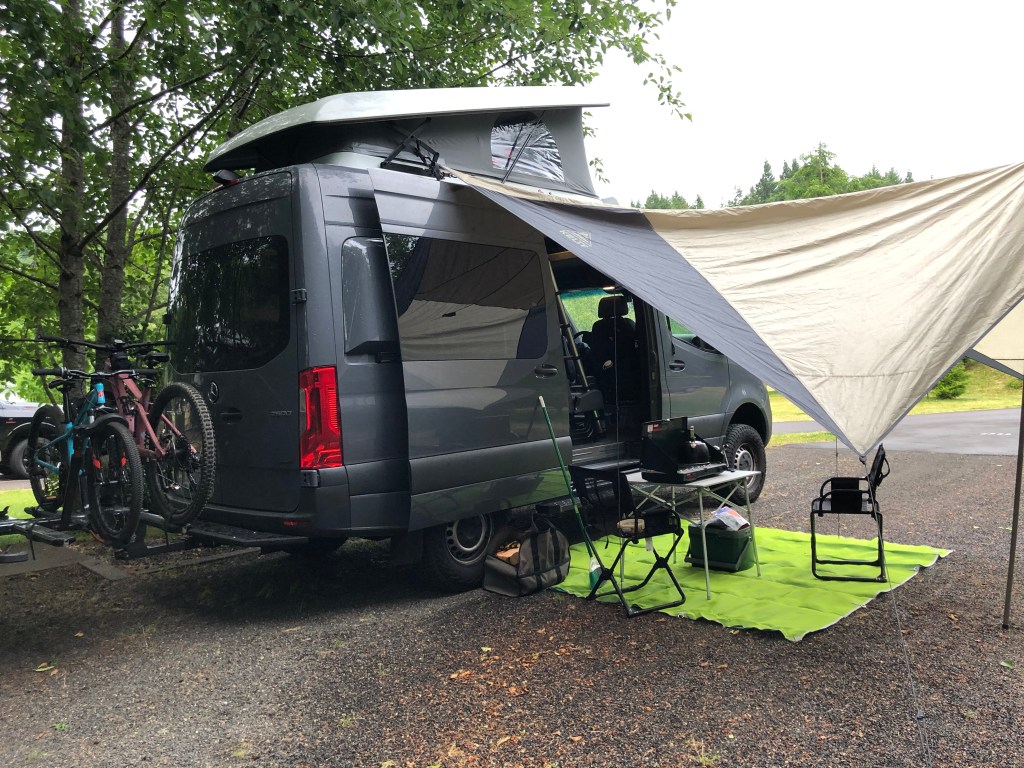
After a hasty retreat back down the road, I took a left and decided to make for White River Sno-Park. There is usually a small crowd of people van-camping in the huge parking lot. I parked, put up my window shades, kicked on the heater, and ate my Chippy’s burrito. With the downgrade to a 2 a.m. wake-up, I decided to sleep in and have a leisurely climb up into White River Canyon. Just after sunrise, I was awakened by chatter outside the van. I peeped out my window to see maybe 30 people assembling with skimo gear in a few different groups. I started making breakfast and opened my door to ask the people right next to me, “Are you all together?” It turns out it was the Mazamas Backcountry Ski group doing avalanche training.

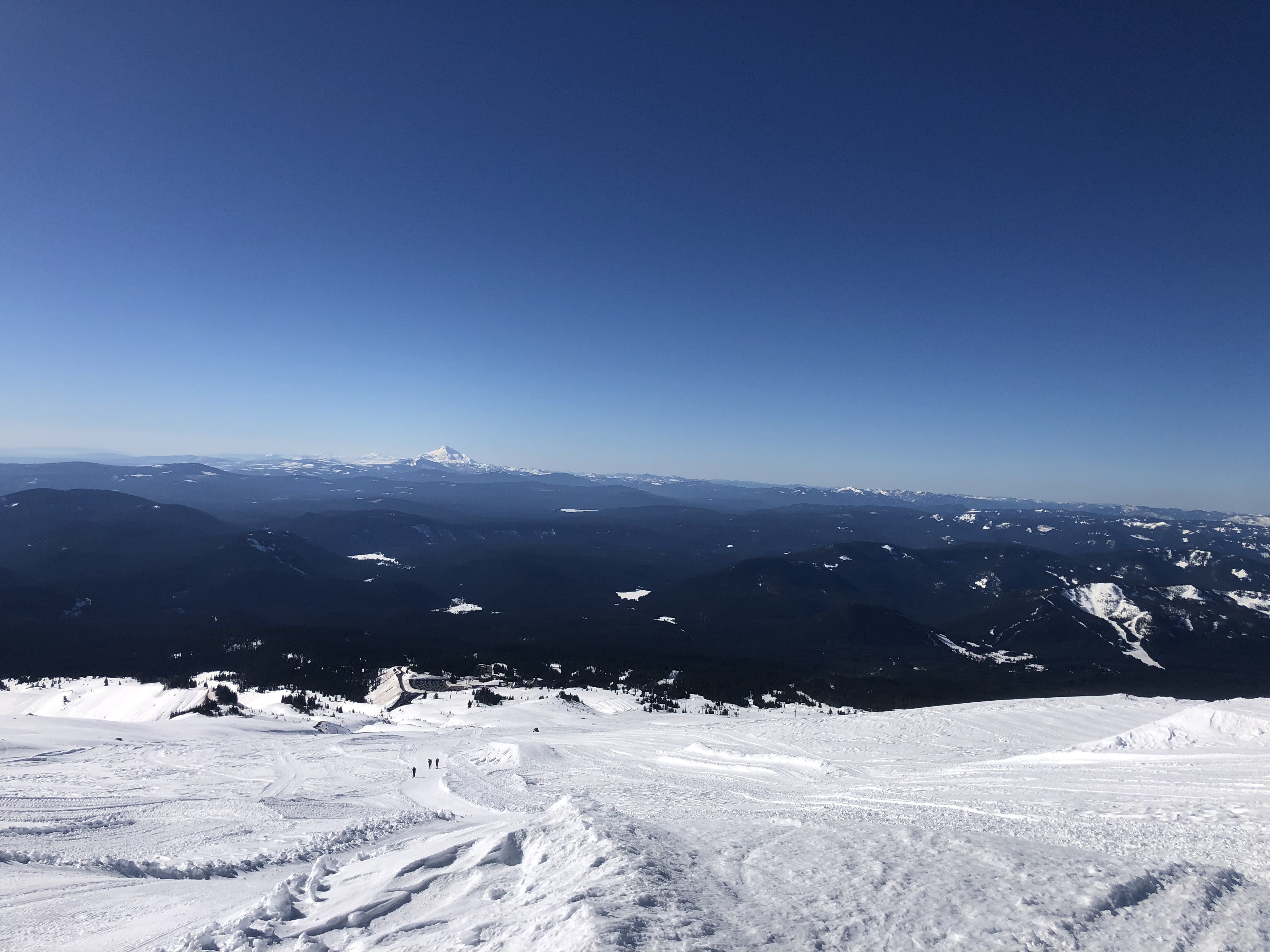
I got my kit together, put my skins on, walked up to the trail, and started up the east side of the drainage. I went around Pea Gravel Hill through the trees to the left and then continued up the ridge. At treeline, I chatted with another solo skier who had tent-camped near treeline. I think the low was 18°F. I had the heater in the van set at 66°F.

We talked for a few minutes about routes. He was going to try to ascend the ridge up and left to the Salmon River drainage and Timberline Lodge. It sounded neat, but it’s a steep slope consisting of wind crust and refrozen, old snow. I was reminded of a mistake I made once in Smuggler’s Notch, Vermont, when my climbing partner and I hiked up to check out the ice routes just as the sun was going down. Once the sun left the aspect we were on, it turned to a sheet of ice, and we had no way to descend. He slid back down with an ice axe and retrieved my crampons so I could walk down. Steep slopes of ice are sketchy. A lot of the time, what’s easy to ascend—either in crampons or kicking steps—can be a nightmare to descend.

I opted to drop into the river drainage and climb Boy Scout Ridge proper. I switched to crampons and a whippet, put my skis on my pack, dropped down, and then climbed up. I continued up toward the White River Glacier for maybe a mile. I decided to transition and ski back out when I took off my mittens to put a windbreaker on, and they started to blow away across the ice. I was getting blown around with my skis on my pack. Time to call it.

The ski out was uneventful except for negotiating the braided streams of the White River, crossing snow bridges, and hoping I didn’t take a swim in the water. Beautiful day for a solo mission—just enough to whet my appetite for spring corn skiing.

Snow is in the forecast for the weekend, so we should be back to our regular weather pattern (snow on the mountain and rain in Portland).
Core Memory

I didn’t leave room in my carry on for my journal. We only took small carry on suitcases and day packs so we didn’t need to check any luggage. I had my iPad, mostly to offload my camera SD card, and to watch some tv on the flight. It was a packed 10 days and I wish I had written down some notes while traveling around Spain and Mallorca.

We flew from Portland to London then on to Barcelona where we stayed for a few days before flying to Palma, Mallorca. Then we reversed course from Palma and spent a night near the airport in Barcelona before catching a plane to London and then back to Portland. Uneventful plane time with the exception of some spicy turbulence flying into Barcelona.

When I was wee lad, I lived in Berlin and traveled to Mallorca for vacation. It’s been a place I’ve wanted to return to for a long time. We hired a local guide to take us in his VW van to a few of the less visited beaches on the southwest side of the island. That was the vibe for us – driving to beaches through the Mallorcan countryside in a beat up VW van with a Belgian hippy…listening to Pumpin Blood from his Ibiza house playlist.

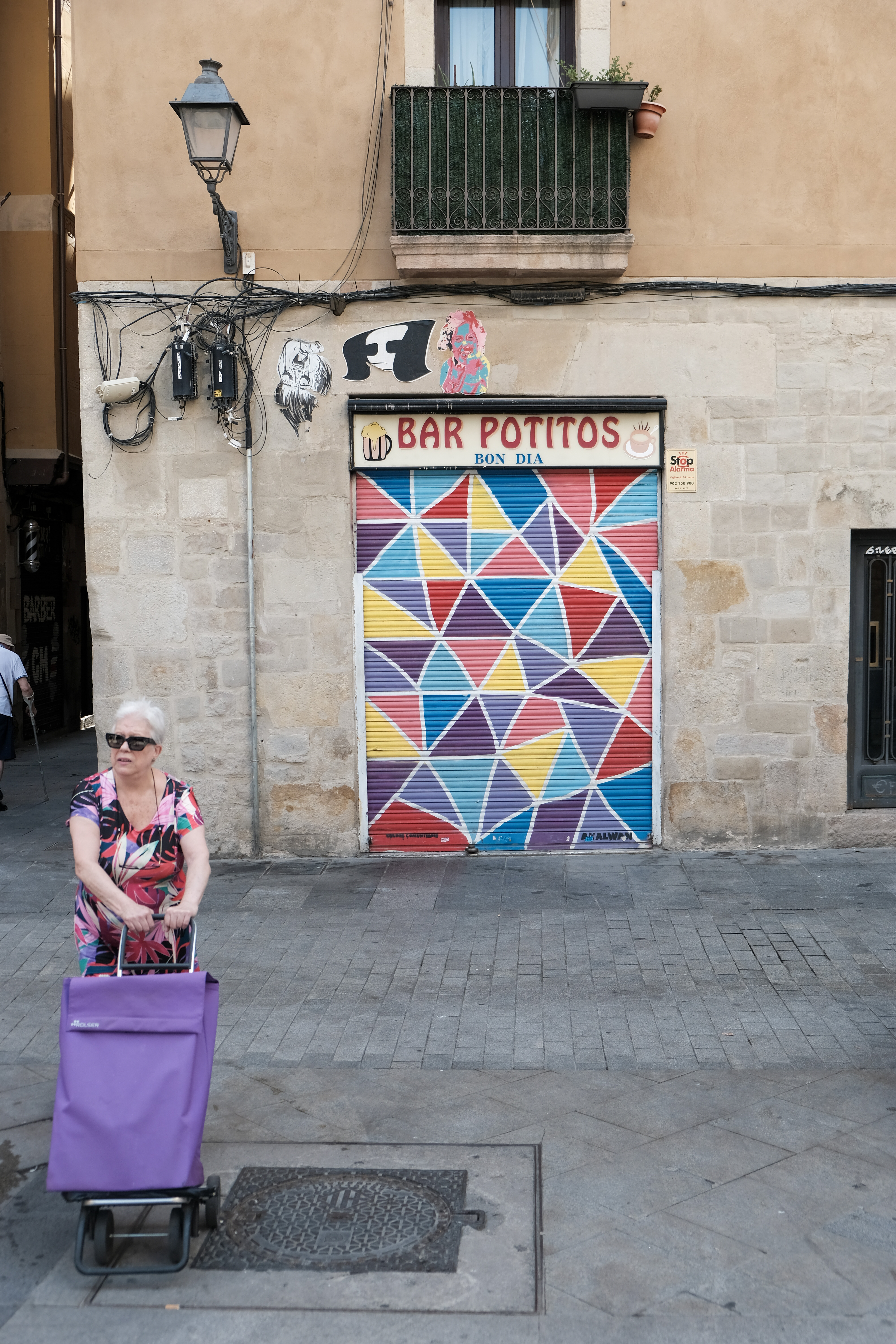
Barcelona… very cool city. We stayed in the Gothic Quarter near the border of the Born neighborhood. I liked the Born a lot – this is where the Picasso museum is located. The museum is comprised of many of his early pieces and shows his life in Barcelona. A lot of art galleries and little tapas restaurants and bars. Less crowded than the Gothic Quarter. Less touristy. More art.

It felt like Barcelona was a large, functioning city. Public transportation was excellent (metro, taxis, bikes, scooters). Extremely walkable from Born to Barceloneta (where the city beaches are). My daughter and I ran most mornings – from the hotel in the Gothic to Barceloneta and back again. There are a bunch of people who get up early to exercise – around 7am is the collision of those who have been out all night, the early exercisers and the city cleaning crews cleaning up after the tourists. The food was good – some of it was a little too fried for my taste, but I had the most amazing tapas of grilled giant asparagus and parmesan with olive oil at one place. So good.

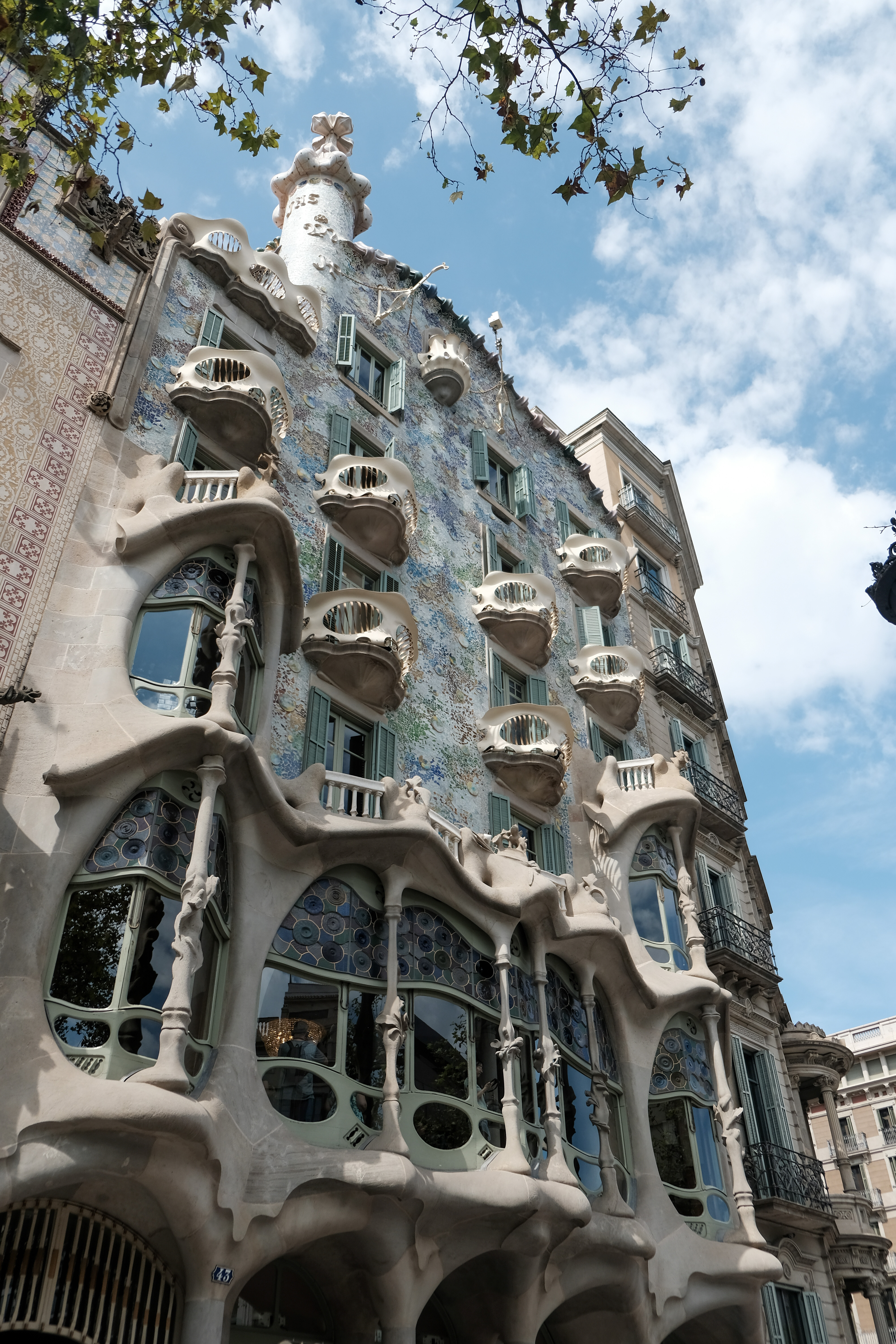
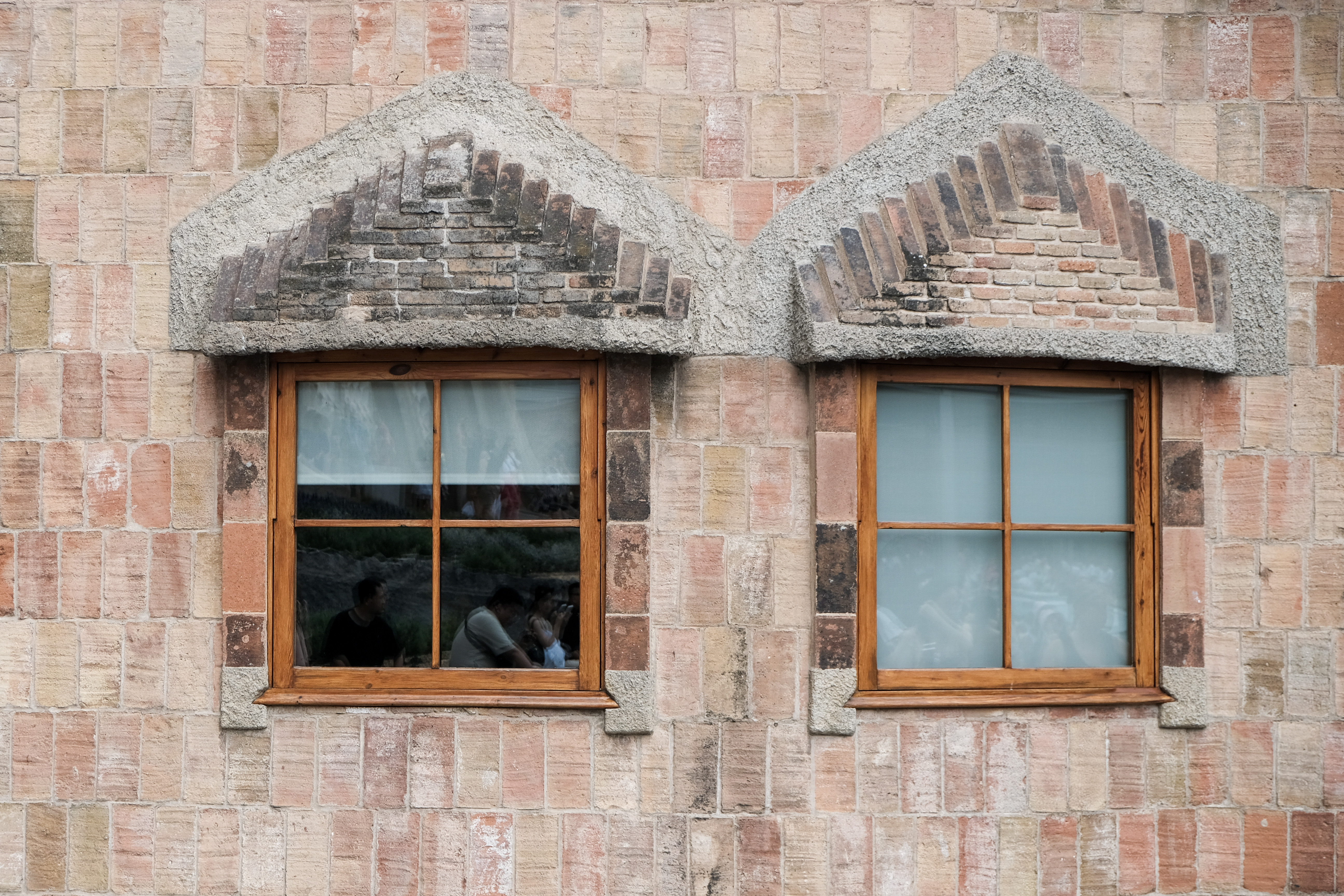
La Sagrada Familia looks like it was built by aliens. It’s difficult to describe. Beautiful stained glass. I took my 18-55mm lens and zoomed too much, I realized later I should have shot with the 23mm to capture more subjects in the frame to show scale. I used the 23mm the rest of the trip. Parc Güel was a very nice morning – we went early while it was still a little bit cool. Casa Batlló was beautiful – I was impressed with Gaudi’s use of organic forms and imagery from the sea was amazing. There’s a reason why people visit his works. Some of the rooms reminded me of the Victor Horta house in Brussels (Art Noveau).

We visited Montjüic – sweeping views over the harbor and the city, walked down through the Olympic village and saw that the diving well pools are now public pools.

The neighborhood festival in Gràcia was a highlight of the visit. There is a contest for best themed street and the residents take it very seriously. Lots of good food (and gelato) just walking around. Gràcia also seemed to be ground zero of the anti-tourist sentiment. It’s a complicated issue – if property investors bought up apartments in your city and rented them to tourists, pricing out the locals… you would protest as well. It’s not necessarily a tourist issue, but a local government issue – I read that by 2029, there are going to be significant caps on Airbnb rentals in Barcelona. We stayed in a hotel.

Mallorca is…well… the same and different than I remember it from 30+ years ago. I explained to my girls that it’s about the same as flying from Portland to LA (even shorter in most cases) like much of Europe flies to the Mediterranean and particularly Mallorca. Our beach guide pointed out that the English stay in Magaluf and the Germans stay in Peguera. If you want to party with the English… go to Magaluf.

We snorkeled, cliff jumped and swam around in sea caves. Our Belgian guide took us 4-5 different beaches. It was really the best use of our time as we would have never been able to find the beaches or eaten up time driving all over the island if we had rented a car.

I wanted my girls to experience Mallorca, so… mission accomplished. They’ve definitely got the international travel bug ever since our London trip a few years ago. They’re already asking to go back to Mallorca. I’m ready to find some more off the beaten path locations.

All photos taken with a Fujifilm XH-1 and either the 18-55mm kit lens, or the Viltrox 23mm f1.4 (I love this lens). Classic Chrome film simulation.

RACE result

I sit here at my desk nursing a Lifeway Kefir and eating a bowl of steel cut oats for lunch. I’ve eaten 1 banana in the past 3 days after having what (I suspect) was some kind of stomach virus since Sunday. I put so much thought and effort into the race on Sunday, I didn’t even think about the plan after I finished.

Once I crossed the finish line I got my finishers medal and then one of the course marshals asked me what age group I was in — I don’t know. I told him my age and he gave me the 2nd place age group medal. Then I walked over to the drink table and had 2 small cups of gatorade and a banana and waited for my family to walk over and for my daughter to finish.

I don’t think I’ve ever run a more perfectly executed race. Some training highlights to remember:

  • Long runs exceeded the distance. I think my longest long run was around 15 miles with a lot of climbing. Tabor to Council Crest and back is my long run jam.
  • One 15 mile run close to race pace on the Leif Erikson trail in Forest Park – this one really simulated the course (it was on a gravel path through the woods near Snoqualmie, WA)
  • A 10 miler at threshold pace – it was a 10 mile PR for me (before the race), and was good training for maintaining a hard effort in the later miles.
  • Speed work at the track. I did a few sessions of 400s at max HR followed by a 400 recovery – usually 5-6 repeats, then a cool down on the way home.
  • Threshold session at the track – this was the week of the race and was good to maintain pace at my lactate threshold heart rate.

The plan was to have consistent pace throughout the race, then negative split the second half and give it full gas in the last 5K. I did all of those things. My time was 1:37, average pace of 7:24 per mile. Personal Best half marathon and 2nd in age group (in preliminary results I was first, but someone must have been just ahead of me). Early in the race I had to pump the brakes to slowly build to the pace I wanted. In the first 2 miles as I started to dip to 7:20-7:10, I slowed down to keep it closer to 7:40 or even 7:50. My heart rate slowly started to rise, to gently ease into my race pace.

I carried 4 gels in my shorts rear pockets. There were supposed to be aid stations with water every 2.5 miles, but I didn’t see one until around mile 4. I ended up eating my first gel around mile 6 dry with no water. I just swallowed it in 2 gulps, then at the next aid station with water, took 2 cups and drank them to dilute the gel. It worked. I don’t think I would have been able to handle a cup and gel at the same time anyway.

Once I got up to race pace, I kept an eye on my heart rate and kept it between 154-163. Toward the top end. This was my lactate threshold and the fastest pace I could maintain without blowing up. A few times I needed to surge for a short time to pass another runner, but once I passed, I tried to bring it back down and maintain. I had a 2nd gel at mile 9 and swallowed it dry with no water, then got water when I got to the aid station. One mistake I made was that I was holding the top of the gel in one hand and the gel packet in my other hand and after I finished it, I accidentally dropped it. I was running in a pack and there was no way I could stop to pick it up.

Mile 9 was where I started to get worried I was going too early and tried to bring it back slightly to conserve for the last 5K. Once I hit mile 10, I just let it ride and started to drop the hammer. I caught a young guy, maybe a high schooler and ran with him for a mile, then started to pull away.

I could hear a runner at my back going into the last mile, but I really didn’t care to do a race at the finish line, I was at max HR and firing the afterburners. I finished at just under a 7 minute pace.

Final thoughts:

  • I don’t think I could maintain this pace for a full marathon (AT THIS POINT). If I trained at this pace with longer runs thrown in – I think I could.
  • It was really hard to get my gels out of my shorts pockets. I didn’t want to carry any waist pack or belt… maybe if I had shorts with better pocket access it would help. It was cumbersome while running fast.
  • Water at the aid stations was fine. I was hydrated before the race, peed twice before the start and never felt like I had to stop for a bathroom break.
  • I now realize why Tour de France cyclists hop on the trainers after they finish a stage. The lactic acid in my muscles came on strong once I stopped. I should have done a proper cool down. Soreness is gone after 2 days.
  • I completely messed up my post race nutrition. I started pounding calories – another banana, a cookie, then had a subpar breakfast sandwich… and most disastrously – a Burgerville grilled chicken sandwich which destroyed my gut biome. Thus the kefir and oatmeal.

What’s next?

  • I had so much fun racing. I was thinking during the race… it turns out I am a killer. Don’t sleep on Chris. I loved surging and passing, being tactical with the pacing. It was so fun to go for it. I was pushing the envelope of my training and fitness. Everything clicked.
  • I want to ride my bike. I was doing some long (50-70 mile) gravel rides and I want to get back in the saddle for those long rides. And I want to get on my mountain bike. And do some more backpacking.
  • I feel like I should capitalize on this fitness and look at Fall marathons. I need to think about that though… Do I want to put in the time?

The data:

Ready to RACE.

Proper planning prevents piss-poor performance.

3 days to racing the Jack and Jill Half-Marathon and I feel ready to go. Nothing left to do but pack up my race kit and mentally run through the execution. Posting this here to put some skin in the game…and commit.

Goals

  1. Have fun.
  2. Run strong.
  3. Fuel + hydrate properly.
  4. Pace properly.
  5. Stick to the plan.

Pace plan

  • 5K (~3 miles) – Under 24 minutes.
  • 10K (~7 miles) – Under 47 minutes.
  • 10 miles – Under 1 hour 17 minutes.
  • 13.1 miles – Under 1 hour 40 minutes.

That pace is around 7:40/mile. I’m planning to stick to 7:40-7:50 for the first 5-6 miles, then try to negative split the second half with a pace of around 7:20, and the last 5K at full gas. Based on training the past few weeks, my lactate threshold is around 160 bpm, meaning I can clear lactic acid from my muscles at the same rate it’s produced at that heart rate. Beyond that I only have a few matches to burn before I blow up. The trick is to not blow up until the finish line.

I’m not carrying any hydration (there is water every 2.5 miles). Pre-race meal will be half a banana and half a piece of bread with jam. I’ll eat one gel 20 minutes before the start, then another around 5 miles, and a final (caffeinated) gel around 9 miles. At a 7:40 pace I can delay glycogen depletion longer into the 2nd half of the race and then burn it all to the ground on one more gel. Leave it all on the pitch so to speak.

The course is a net elevation loss, so it’s going to take some discipline not to get complacent and fall into a comfortable pace pulled by gravity – I’ll need to stay on the gas to push the pace.

I had a good speed work session at the track yesterday, I held a threshold pace of ~7:20 for 20 minutes. For Sunday I’ll need to find another gear for the final 5K. I think I can do it.

And of course a final caveat… “Everyone has a plan until they get punched in the face.” – M. Tyson.

Spring Reign

I started writing this post over a month ago, but didn’t quite know where it was going and I got really busy. Thus the title. We’re well into a string of 100°(F) days here in Portland. A couple of things to note going on this season.

I finally diagnosed the hamstring issued that has plagued me for years (I know). It was never bothersome enough to stop me from running a moderate pace, only running fast. I was focused on building a big base from around February – May and most runs were Z1/Z2 – super easy pace. And then I ran with my youngest daughter one Saturday and she kicked up the pace to put dad in the pain cave (successfully) and I aggravated the hamstring.

That led to a lot of research and the diagnoses that it was high hamstring tendinopathy. And the long path to physical therapy that mostly consists of hamstring strengthening exercises – but not stretching. A little counterintuitive. What I’ve found helped a lot is a prone hamstring exercise with a resistance band. Doing this exercise before a run to warm up the hamstring and tendon has done wonders for my runs (and pace).

In June, I finally had the gum graft that I had been putting off for a year – and required stitches in my mouth for 6 weeks. Double-yikes. I was advised not to run or lift for 3 weeks while everything healed up. The doc never said anything about cycling though, so I hopped on the gravel bike and went exploring. Happy to report I’ve cracked the code of long rides in Portland. I’ve been in a super-loop where the cycling has helped the hamstring, and my overall Vo2 capacity – which has helped my running. My running mileage is back up to 30 miles a week… and my cycling miles are up to around 100 miles with a few long rides thrown in the past month.

A couple of other things that have been like icing on the cake this year…. I stopped drinking coffee (which has helped my sleep and recovery, and I stopped drinking alcohol – which was wreaking havoc on my HRV (heart rate variability score). I didn’t drink much before, but a beer a week was messing up my sleep which messes up my recovery, which messes up my workout the next day. I have since discovered NA beer, so when I get the feeling, I reach for one of those.

A couple of other nutrition tweaks – no more ultra processed food poison… and I’m trying to hit over 100 grams of protein per day with protein shakes and protein in my oatmeal. I wasn’t carrying much extra weight, but I’ve managed to lose about 16 pounds. Which has boosted my cycling FTP and running V02Max. So yeah. I think I might be entering my 2nd act. I’m just below my racing weight when I ran Mountain Lakes 100, but more fit.

Oh… and almost forgot. And I got a mountain bike. Which I haven’t had in about 10 years. It was time. So I’ve been back on the local trails and trying to get the girls out riding with me. It’s a full squish YT Izzo. Bike geometry has completely changed in the past 10 years – this is a 29’er “down-country / trail bike”.

I’ve got a half marathon coming up in 3 weeks with my older daughter. I’ll try to stay with her as long as I can. Mrs. Rivard will be running a full marathon in the hopes of qualifying for Boston (again). It will be a fun weekend of racing!

I’m thinking of this season as a warm up for some more racing next spring. I missed a few of the early gravel races – but I’ve got them on the calendar for next year. And I see more more ultras in my future. This is the way of the endurance junky.

Vibes

Quick uphill from Timberline to Palmer on Saturday morning. I haven’t toured since climbing Mt. St. Helens last spring. I wanted to see how my new skis were on the uphill. My mountaineering skis are Volkl VTA 88 – so 88 underfoot and mostly carbon with a little piece of metal under the binding – Atomic Backland Pure Alpine tech bindings. They’re light, like super light. They’re amazing at going uphill – but leave something to be desired on the downhill – they don’t ski crud very well and chatter somewhat at high speeds.

New skis are Fischer Rangers at 96 underfoot with Salomon Shift bindings. I honestly couldn’t tell the difference on the uphill. I’ve gotten 14 days skiing this year, and just over 100K descent. I’m starting to zero back in to having a more capable ski for the descent and if I need to suffer a little bit on the uphill, so be it. Work ain’t hard, you just have to do it. I should add that I left my touring boots at home (Fischer Travers Carbon – also super light) and wore my Scarpa Maestrale RS’s – heavier, but stiffer and ski a lot better than the Fischers.

I’ve repurposed an old pair of Black Diamond climbing skins – I think they’re over 15 years old… but the glue is still good. I had to replace the tail attachments as UV and time has destroyed the rubber strap. And I crimped a new piece of swaged cable to accommodate the wider tip on the Fischers – they worked well enough. They’re short about a quarter inch on each side of ski, but it’s enough coverage to get decent purchase.

I’m somewhat of a purist on the use of heel risers. Mostly unnecessary if you’re setting a reasonable skin track. The climber’s trail up to Palmer consists of refrozen cat track right now, so mostly moderate steepness. On Saturday there was one short steep rise that I began to ski up only to realize I was on my right side starting to slide down. It happens fast. Nothing to be alarmed about and I got my skis below me and stopped. There were a couple of other climbers right behind me and I stepped aside and one of them did the same thing. Once second of pressure off the skin and he cut loose and slid down. Both of us ended up going around that section to cut the angle and I put my heel risers up for the rest of the climb.

When climbing or descending, you notice each change in the snow surface, it was softening up below, but gaining elevation it turns to hard pack, then refrozen crud, then a bit more wind blown and icy. When I got to the icy bit, I stopped to put on my ski crampons – it’s like going into 4 wheel drive low. I used those until veered left to get to the top of Palmer.

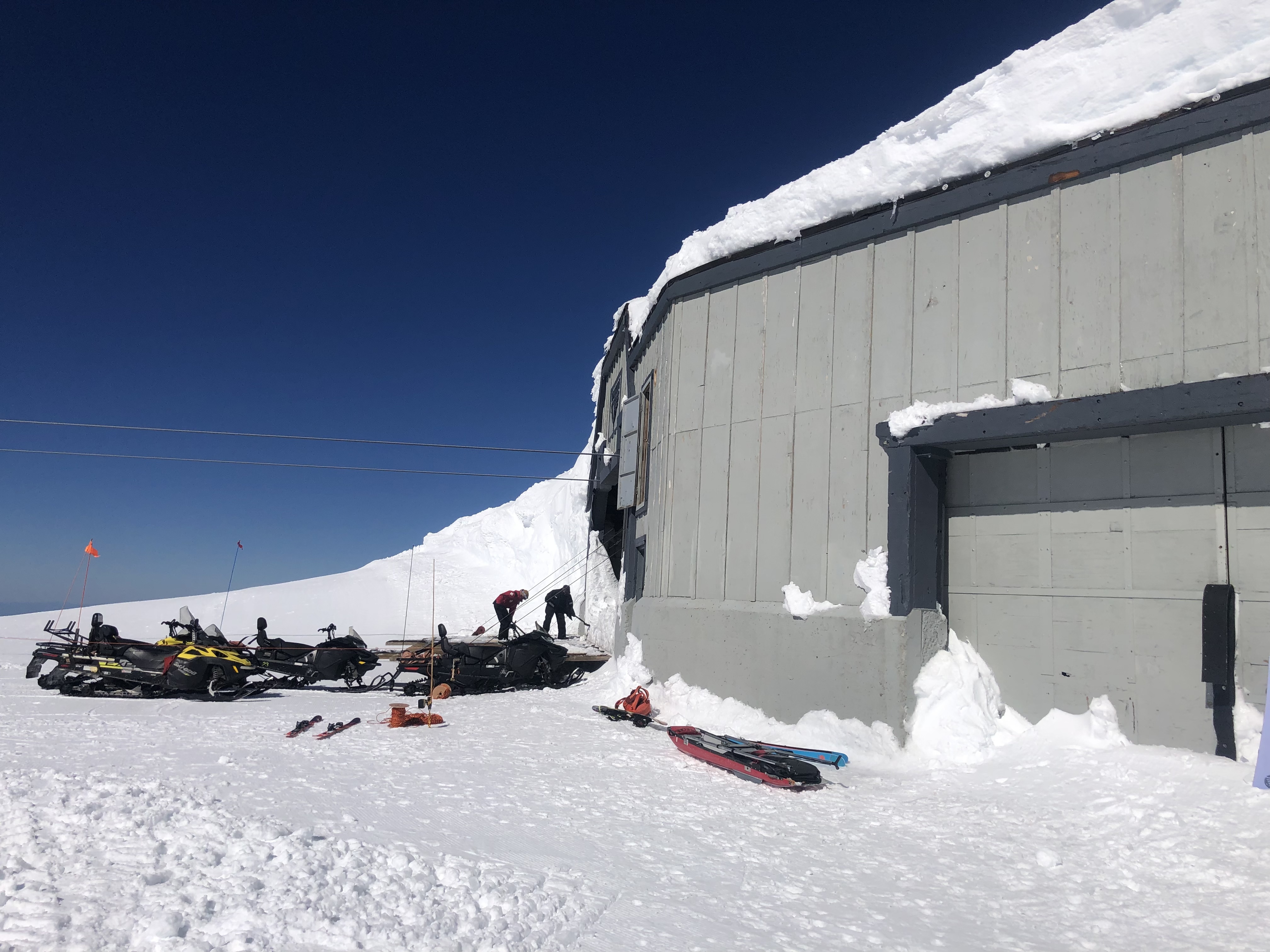
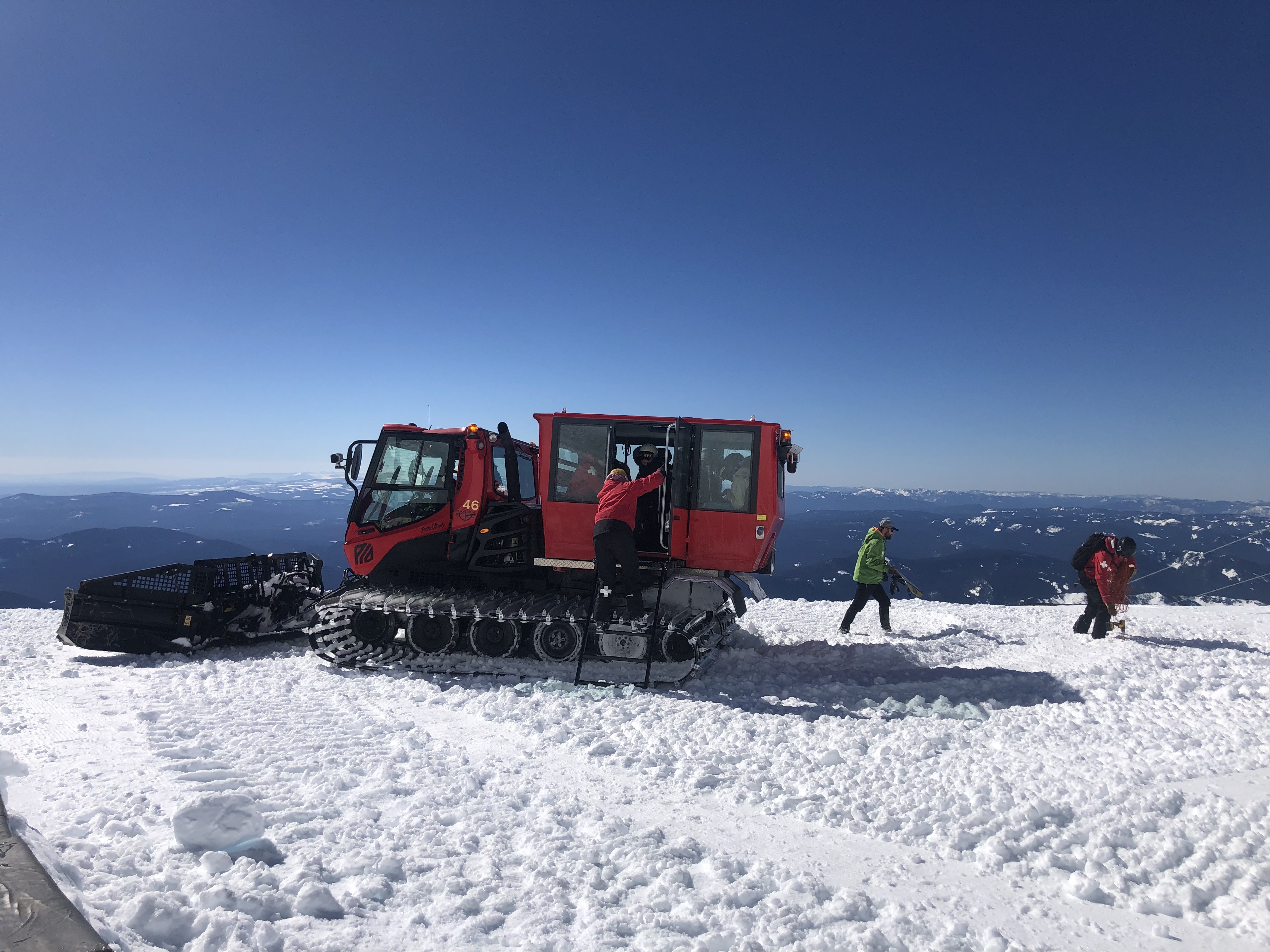
There were snowcats driving resort skiers to the top of Palmer as the lift hut is still buried. Lifties and ski patrol were starting to dig it out for Spring lift-accessed skiing. Kind of a scene as a snowcat arrives and disgorges 12 of so skiers and their equipment. I sat on my pack and ate my pbj watching them before I pulled off my skins and skied all the way back to Government camp. I think it may be the longest run in North America? If not it’s pretty close. 4500 vertical feet one way down.

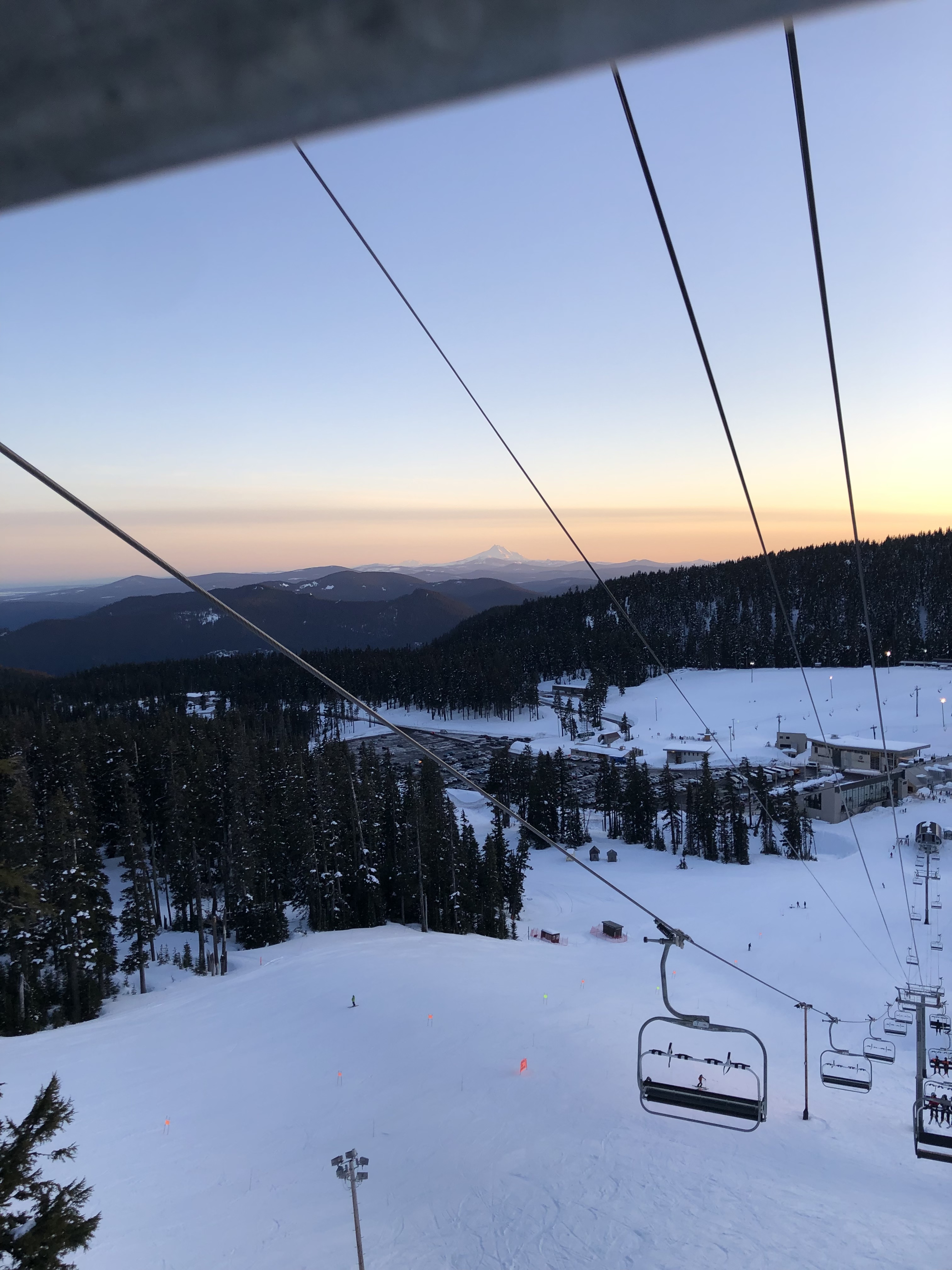
Conditions were just like the uphill variation: packed, scoured conditions at the top of Palmer, sweet sweet corn snow between Magic Mile and Jeff Flood lifts, then wet and slow just before reaching Summit ski area and Government Camp where I parked.

So how did I get to Timberline on the way up to start? That, dear reader is the big secret. The Mt Hood Express Shuttle bus runs like a Japanese bullet train from Govy to Timberline – one could lap it if timed correctly. I parked in Government Camp, took the bus to Timberline, skinned to the top of Palmer and then skied all the way back to the van in Govy. Shuttle is $2. Or about $1 per 1K of vertical up. Cheapest lift ride on the mountain.

F0M0

Sitting here at my desk designing a solution for a custom GPT in our finance product and side-eyeing the snow report on Hood. The snow is piling up. It’s been a good season so far. We had a couple good days of hero snow, but it’s got me wanting more. Moar.

I’ve started a little list of spring/summer adventures. Definitely climbing and skiing the volcanoes, but also some backpacking weekends south and east where it will be warmer. More to come.