Designing Meaningful Data Products, Enterprise UX Conference
The talk I gave for the UXPin Enterprise UX virtual conference on February 15, 2017.
I had lots of fun talking about data and design!
100 things to remember
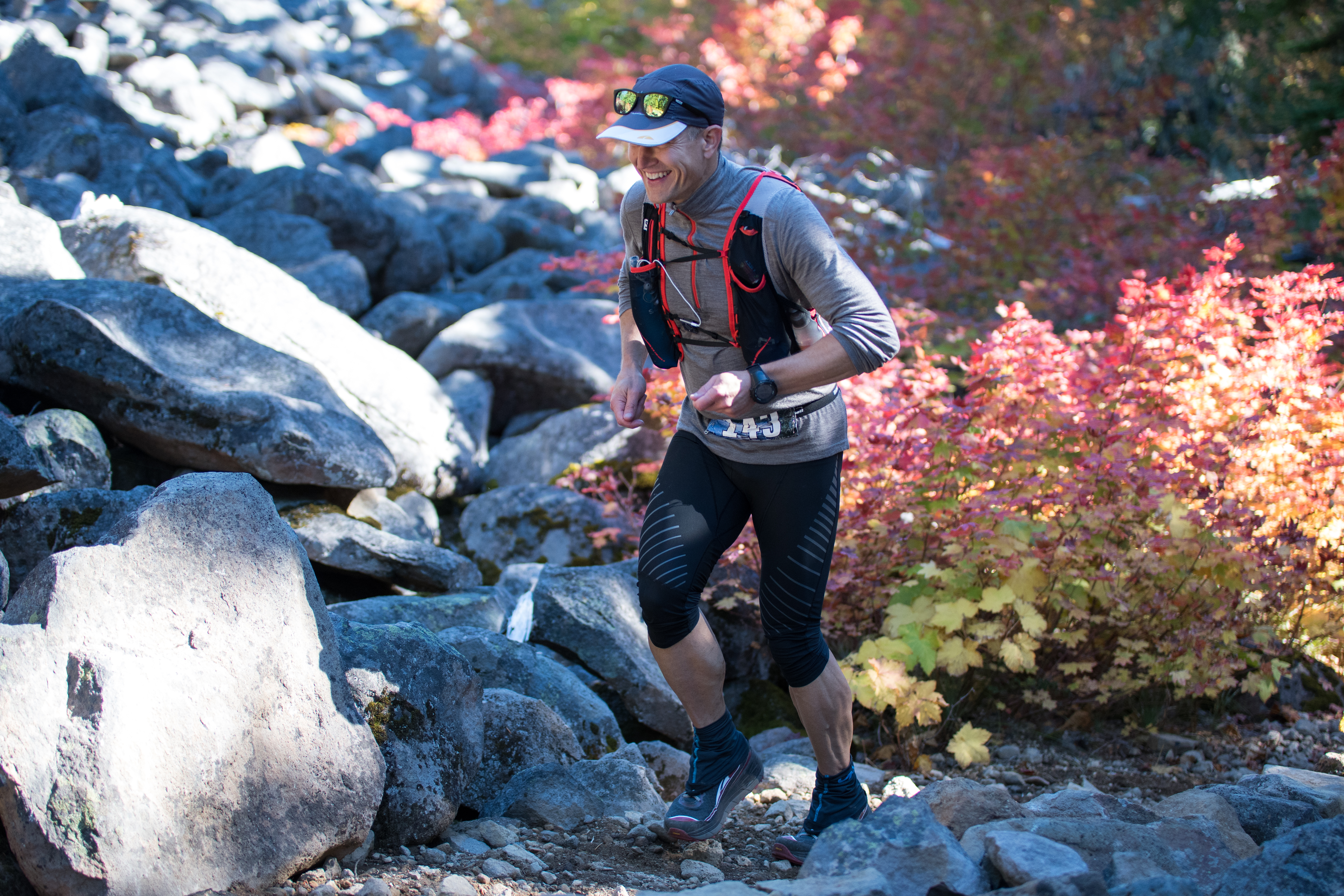
Found this in my notes last night. It’s the list of things that I wanted to remember when I ran Mountain Lakes 100.
Tips I picked up from reading a lot of articles and from reading Jason Koop’s book, Training Essentials for Ultrarunning. I highly recommend that book and if there’s one thing that I took away from it — it’s that you want to show up at the start line as FIT as possible. That means having your engine / Vo2max as high as possible — which means, do a lot of threshold training — which means — run a lot of hill intervals.
The other book that I recommend is by Matt Fitzgerald, How Bad to you Want It? There was some pseudoscience-y bullshit in there, but for the most part it was inspiring to read anecdotes about the mental side of endurance racing. And running an ultra is 99% mental.
Here’s my list.
- Finish the race (there’s nuance to this one – it’s not, “JUST finish the race” or “TRY to finish the race”, it’s explicit and direct: “finish the m’fing race”)
- Pacing
- Easy the first 25 miles. Walk.
- Refresh at 50 miles at Clackamas
- Run as far as I can
- Walk/run, shuffle to get back into running form, then run
- Slow down when eating, then run when I have energy
- Maintain a consistent pace (slow and steady)
- Nutrition
- Eat when my alarm goes off, every 20 minutes after 1.5 hours
- Eat 200+ calories per hour
- Try to eat as much real food as I can stomach
- Attitude
- Take care of problems in a deliberate way, don’t let them go
- Say please and thank you.
- Have fun and enjoy the long run! Force the smile.
- Recognize the pain, sit with it and then let it go
- Your heart must be large
- Steer clear of negative energy people
- Accept
- Diagnose
- Analyze
- Plan
- Take Action
- Keep focusing on the positive. No matter how bad things are, it could be worse.
- Keep shuffling, even if it seems just as slow as walking. It’s not.
- You want this BAD.
- This is a meditation exercise
- This is your treat!
- Run the plan, run your race.
- Keep it together. You got this.
- You are an unstoppable force.
- slow is smooth and smooth is fast
- Steady and strong, steady and smart.
- Be patient, no stress. Aid station to aid station.
- If I stop now, I’ll soon be back to where I started. And when I started I was desperately wishing to be where I am now.
- You didn’t come this far only to come this far.
- I’m a tough MF’er.
- Om mani padme hum.
- Just flow
- I don’t stop when I’m tired, I stop when I’m done.
- Absolutely nothing hurts more than quitting would. Barring an injury that physically prevents me from making forward progress, I’m not going to stop until I finish this race.
- I will do all that I can do, and a little more.
- During the first 50 miles don’t be stupid, during the last 50 miles don’t be a wimp.
- Have faith that the low point will not last. Everyone gets out of it eventually.
- Expect a very dark point about every 20 miles, or every 5 – 6 hours. Count the dark points, and make a pact to push through at least 5 of them.
- I CAN do this, I WILL finish
- Clear Your Mind of Can’t
Pocket + Read Ruler
I decided to get organized and stop dropping everything (links, notes, images, ideas) into Evernote (my distributed cognition 2nd brain) so I decided to try Pocket.
I don’t like that I’m locked into Pocket and can only share links with friends through a Pocket url. Super annoying.
https://getpocket.com
With the browser plugin to save articles to Pocket. The thing I found lacking was the absence of a ‘time to read’ estimate.
http://readruler.com/
To provide an estimate for how long an article is going to take to read.
The time to read is key for those limited times throughout the day when I have a few spare minutes to read a short article in my list.
I thought this article was helpful in thinking about how to read all those books in the backlog.
https://medium.com/@kennethn/how-i-read-more-books-13c2357a96a3#.e4vflefwl
The hook
Good read following Hooked and The World Beyond your Head. Same topics but dialing in on choice architecture and variable rewards.
How Technology Hijacks People’s Minds — from a Magician and Google’s Design Ethicist
The takeaway is to always consider (when presented with a fixed set of choices, options, menu items) what is not in the list and why. This gets to the core of choice architecture … unless of course you’re the one making the list of choices.
Notes from books
Not that I’ve looked very hard, but I haven’t found a good way to get to the highlights I make in the books I read on the Kindle. In Crawford’s book, I took pictures within a note in Evernote and let Evernote handle the OCR scan. Then I simply exported and cropped the images. A bit too time-consuming.
Well I looked in my Amazon account and found my notes this morning!
Here are some choice highlights from some 2016 books.
From The Art of Grace:
- 1. Slow down and plan. There’s no way to be graceful when you’re rushing around haphazardly.
- 2. Practice tolerance and compassion. This goes along with slowing down. Take time to listen and understand.
- 3. Make room for others—on the sidewalk, at the bus stop, in a coffee shop, during a business meeting, and in your life.
- 4. Strive to make things easy for people, even in small ways.
- 5. Make things easy for yourself. Be easily pleased. Accept compliments, take a seat on the bus if someone offers it to you, embrace any kindness that comes your way. This is graciousness, and it is a gift for someone else. You are giving another person the gift of being graceful.
- 6. Lighten your load. Shed painful shoes, disencumber yourself of heavy purses, backpacks, and briefcases. Let the bad stuff go, physically and emotionally.
- 7. Take care of your body. The more you move, the better you’ll move. And the better you’ll feel.
- 8. Practice extreme noticing. Look for grace where you least expect it.
- 9. Be generous. It’s a lovely thing to anticipate and fulfill someone’s hopes.
- 10. Enjoy. Raise a glass, as Lionel Barrymore did in the movie Grand Hotel, “to our magnificent, brief, dangerous life—and the courage to live it!”
From When Breathe Becomes Air:
Moral duty has weight, things that have weight have gravity, and so the duty to bear mortal responsibility pulled me back into the operating room.
From Purity: A Novel:
She proceeded to cry torrentially. The only way I could get her to stop was to become, right then and there, a person who experienced as keenly as she did the unfairness of my being able to pee standing up. I made this adjustment to my personality—and a hundred others like it in our early months together—and henceforth I peed sitting down whenever she could hear me. (When she couldn’t, though, I peed in her sink. The part of me that did this was the part that ultimately ruined us and saved me.)
From Training Essentials for Ultrarunning:
Successful outcome goals strike a balance between being achievable and offering a challenge. Where you sit on the achievability teeter-totter depends on your individual tolerance for risk. As you set goals that are more challenging and closer to the limits of your capabilities, you must simultaneously accept a higher level of risk associated with those goals. The inverse is also true, but sometimes it’s harder to grasp. Goals beyond your physical capabilities are not well-constructed goals. It is also important to realize that if you have a low tolerance for risk, an extremely challenging goal is just as inappropriate as a goal that is way beyond your physical capabilities.
 Chris Rivard / Product Designer